

Window Cleaning in Milford, OH: What Local Homes Deal With
Milford sits down in the Little Miami River valley, and the same things that make it a good place to live are the things that keep its windows dirty. Mature trees hang over nearly every street in Old Milford. Valley air holds moisture that glues dust to the glass. Spring storms roll up the river corridor and throw grit at the weather side of the house. If your windows in Milford seem to cloud up faster than they did at your last house, you are not imagining it.
Our crew cleans windows across Cincinnati's east side every week, and Milford homes show a pattern of their own. This post walks through what we actually find on the glass here, why it happens, and how to get it off without wrecking screens, seals, or the older glass a lot of these houses still carry.
Key takeaways
- Milford windows fight three main problems: spring pollen off the tree canopy, mineral spotting from sprinklers and hose rinsing, and grit thrown by Ohio Valley storms.
- Pollen behaves like a film, not a dust. Dry wiping smears it across the glass, and screens trap it and dump it onto sills every time it rains.
- Hard water spots are minerals left behind when droplets evaporate. Fresh spots wash off. Spots left baking through a full season can etch into the glass permanently.
- Older double-hung windows around Old Milford clean up beautifully, but they need hand work. Aggressive scraping and pressure washers are how original glass and glazing get ruined.
- Most Milford homes stay clear with two professional cleanings a year, one in late spring after the pollen drops and one in fall after the leaves come down.
Why do Milford windows get dirty faster than you expect?
Milford homes sit in a wooded river valley, so glass here collects tree pollen in spring, holds airborne dust in humid air, and takes wind driven grit during storm season. Shade from the canopy also keeps glass damp longer, which lets grime bond to the surface instead of rinsing away with the rain.
Geography does most of the work. The Little Miami runs right past town, and river valleys hold humidity. Damp glass is sticky glass. Dust and pollen that would blow off a dry window in an open subdivision settle onto a Milford window and stay there, and each morning of valley fog presses another layer on.
Then there is the canopy. The old streets near Main Street grew their trees decades before most east side subdivisions were platted, and those oaks and maples sit directly over rooflines. That is shade in July and it is also a steady supply of pollen, sap droplets, and leaf litter landing a few feet above your windows and washing down across them with every rain.
People assume rain cleans windows. It does the opposite. Rain re-wets whatever film is already on the glass, mixes it with whatever the storm carried in, and leaves the whole mess to dry in streaks. A dirty window after a storm did not get dirty from the storm. The storm just developed what was already on the glass.
What does spring pollen do to glass and screens?
Tree pollen builds a yellow green film that bonds to glass, especially on damp mornings. Wiping it dry grinds it around instead of removing it. Screens act like filters, loading up with pollen and releasing it onto sills and glass with every rain, so a proper cleaning washes the screens too, not just the panes.
April through early June is the heavy stretch here. Oak and maple pollen is fine enough to work through screen mesh and sticky enough to hold onto glass once morning moisture hits it. By the end of the season the film has a visible cast to it, and on a south or west facing window it has been cooked on by afternoon sun.
The mistake we see most is dry wiping. A paper towel across pollen film smears it into an even haze that looks worse than the dirt did. Pollen needs to be washed, with an actual wash solution and a rinse, then squeegeed off. And if the screens go back on still loaded with pollen, the first rain re-seeds the glass you just cleaned. Screen washing is part of the job, not an add on.
If you have ever cleaned your own windows and watched streaks appear two days later, the screens or the technique were usually the culprit. We wrote up the full mechanics of that in our post on streak-free window cleaning in Cincinnati.
Where do hard water spots on Milford glass come from?
Hard water spots come from sprinkler overspray and hose rinsing, not from rain. Water in our area carries dissolved minerals, and when a droplet dries on glass the minerals stay behind as a white ring. Caught early they wash off. Left through a season of sun they can etch the surface and become permanent.
Rainwater is essentially distilled, so rain does not leave mineral spots. The white constellation you see on the lower half of a window almost always maps to a sprinkler head, a soaker hose, or the spot where someone rinses the car. Municipal water across greater Cincinnati runs on the hard side, and every droplet that dries on glass leaves its minerals behind.
Timing decides whether this is a quick fix or a permanent scar. Fresh spotting sits on top of the glass and comes off with the right cleaning. Spotting that has baked through a summer starts bonding with the surface, and at that point no amount of scrubbing helps. It needs mineral removal work, and in the worst cases the etching is simply in the glass for good. If your sprinklers hit your windows, adjusting the heads costs nothing and saves the glass.
What is storm grime, and why does it hit one side of the house harder?
Storm grime is the mix of dust, pollen, road film, and fine grit that wind drives onto a house during Ohio Valley storms. Most storms here arrive from the south and west, so those exposures take the worst of it. Homes near the US 50 and SR 28 corridors also pick up traffic film year round.
Walk around a Milford house that has not been cleaned in a year and the glass will not be evenly dirty. The south and west sides, the directions our weather comes from, carry visibly more buildup than the sheltered sides. Storm winds pick up whatever is loose, field dust, pollen, fine road grit, and press it onto wet glass, which is the best adhesive there is.
Houses close to the busier corridors collect an extra layer of traffic film, a faintly oily haze that plain water will not cut. It needs a proper wash solution and agitation. This is also why we check screens on the weather side more carefully. They take the same abuse as the glass and tend to age faster.
How should older Milford homes be cleaned differently?
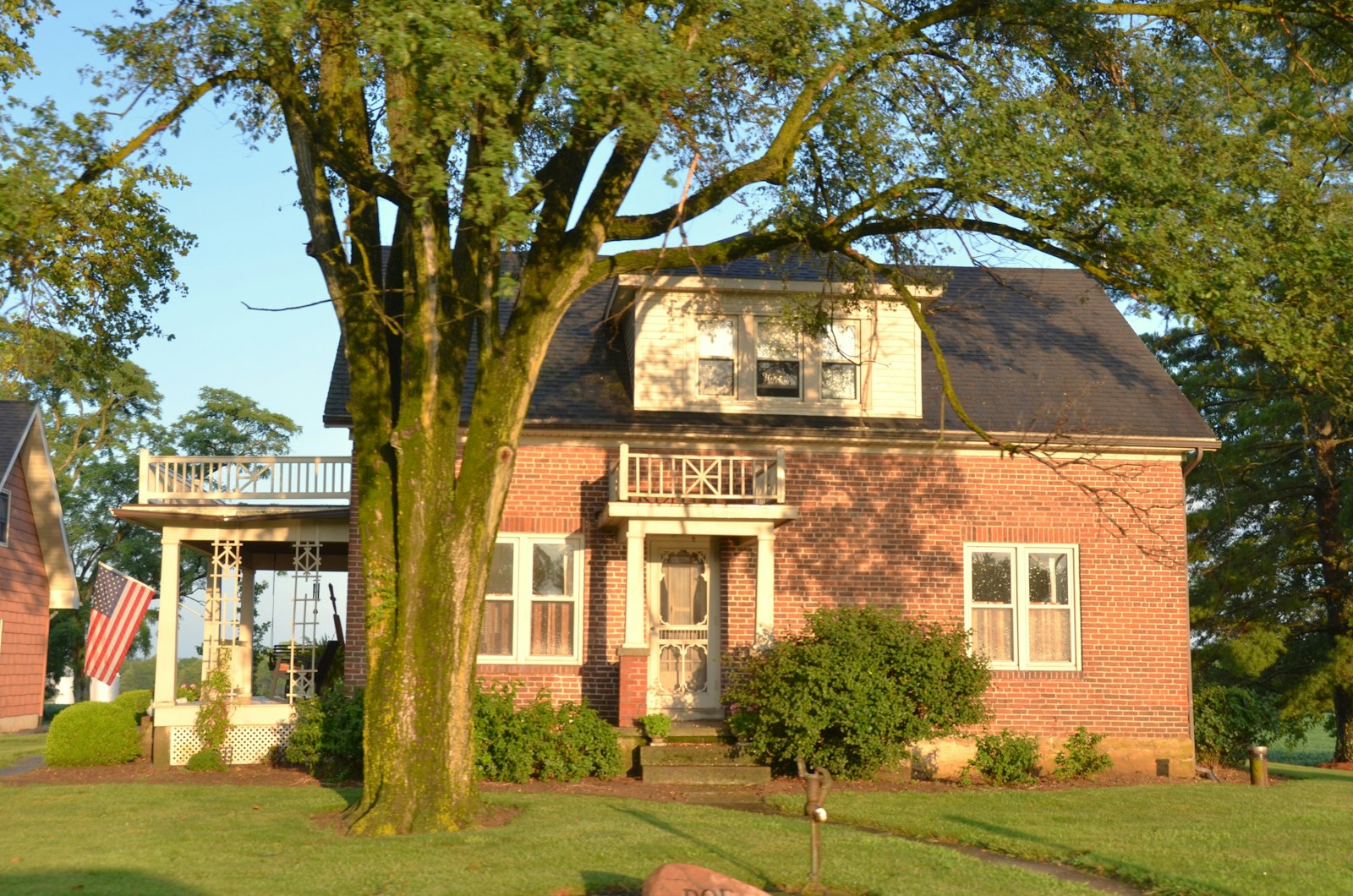
Older homes around Old Milford often carry original double-hung windows, wood glazing, and sometimes wavy antique glass. Those clean up beautifully with hand washing and a squeegee, but they are exactly the windows that aggressive scraping, harsh chemicals, and pressure washers destroy. Older glass gets hand work, always.
Milford has real range in its housing stock. The streets around downtown have homes more than a century old, while the neighborhoods off Wolfpen Pleasant Hill and SR 131 run from mid century ranches to new builds with vinyl windows. The new stuff is straightforward. The old stuff deserves more care than it usually gets.
Original glass is softer and often slightly uneven, which is part of its charm and part of its risk. A razor blade used carelessly on it leaves permanent scratches. Old glazing putty does not tolerate being soaked or blasted, and a pressure washer aimed at a hundred year old sash can drive water straight into the wood. Our crews wash these by hand, mop and squeegee, with the water fed pole reserved for upper floors where it is gentler than a ladder against old trim.
Inside faces matter on older homes too, since decades of furnace seasons leave their own film. That side of the job is covered on our interior window cleaning page.
How often should Milford homes schedule window cleaning?
Twice a year fits most Milford homes: late spring once the pollen has dropped, and fall after the leaves are down. Open lots with little tree cover can often stretch to one visit. Glass heavy homes and houses near busy roads look their best on a quarterly schedule.
The spring visit is about timing more than frequency. Clean in March and the April pollen undoes it within weeks. We tell Milford homeowners to book once the heavy pollen has finished, usually late May into June, so the result actually lasts the summer.
The fall visit pairs naturally with gutter season. The same canopy that sheds pollen in spring drops its leaves in October and November, and if a crew is already on site for a gutter cleaning, cleaning the glass in the same window of time saves a second setup. Whether one visit or four makes sense for your house depends on trees, exposure, and how much glass you have, which is exactly the kind of thing a quick look answers. Our post on whether professional window cleaning is worth it breaks down the value math in more detail.
Milford windows looking tired?
We clean exterior and interior glass, screens, sills, and tracks across Milford and the rest of Cincinnati's east side, and we hold a 5.0 star rating across more than a hundred Google reviews. See what a full visit includes on our professional window cleaning in Cincinnati page, or check coverage for your neighborhood on our Milford service page.
Free quotes, no pressure. Call or text (513) 943-0719 or request a quote online.
Frequently asked questions
Does Cincinnati East Window & Gutter Cleaning serve Milford?
Yes. Milford is core territory for us, from Old Milford out to the neighborhoods along SR 131 and Wolfpen Pleasant Hill. Details for the area are on our Milford page, and we serve the surrounding east side communities as well.
Can a window cleaning remove hard water spots?
Fresh mineral spotting comes off with a proper wash. Spotting that has sat through a season of sun may need dedicated mineral removal, and severe cases can be etched into the glass permanently. We tell you honestly which one you have before any work starts.
Do you clean screens, sills, and tracks too, or just the glass?
The full visit includes screens washed, sills wiped, and tracks cleaned out. On Milford homes this matters more than most places, because screens load up with canopy pollen and re-deposit it onto clean glass with the next rain if they go back on dirty.
Is exterior cleaning enough, or do I need the insides done too?
Exterior cleaning handles everything the weather puts on the glass, which is most of what you see. Interior faces build a slower film from cooking, candles, pets, and winter furnace months. Many customers do exteriors twice a year and add interiors once a year.
Photo by Roger Starnes Sr on Unsplash.
