

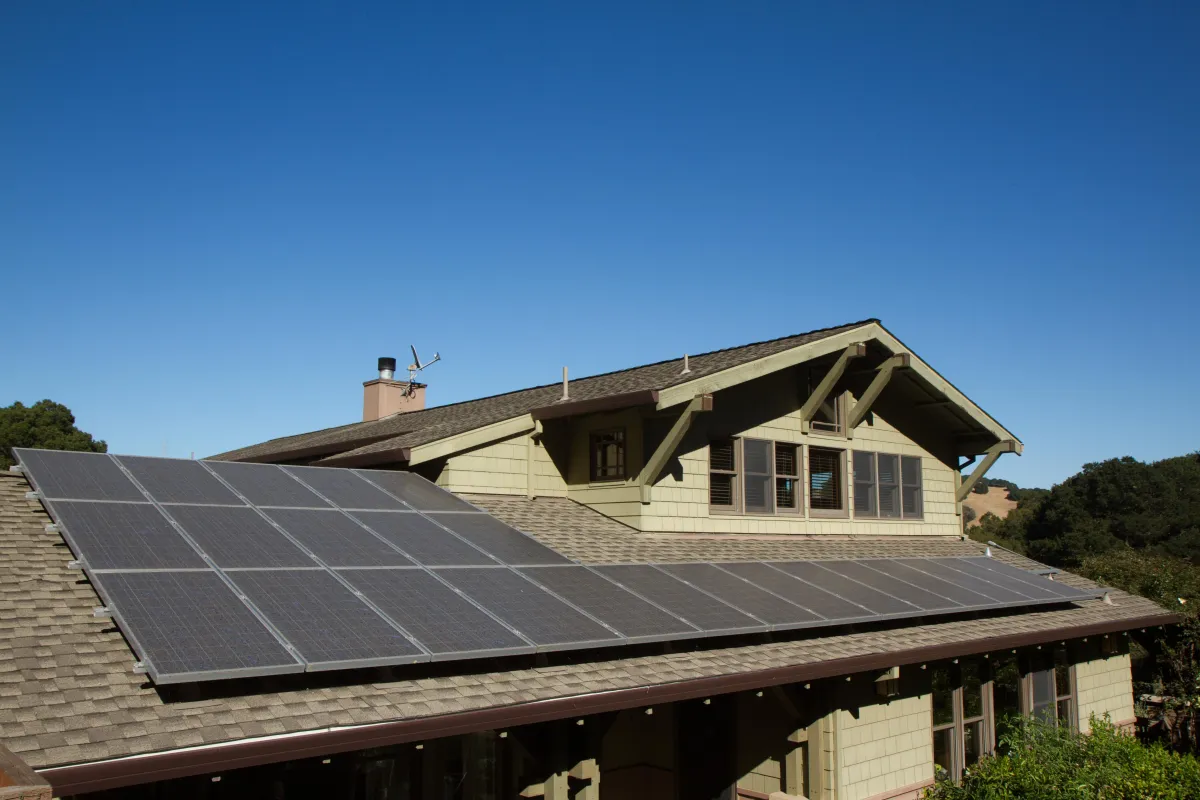
Solar Panel Cleaning in Cincinnati: Why Output Drops
Every July we get the same call from homeowners in Anderson Township and Mount Washington. The panels went in a couple of summers ago, the monitoring app looked great that first season, and now a stretch of blue-sky days produces noticeably less than it used to. Nothing on the roof is broken. The inverter is not throwing an error. The system just quietly hands back a little less than it should.
Most of the time the answer is sitting right on the glass. Cincinnati loads the air up between April and September: tree pollen off the mature oaks and maples all over the east side, road dust, exhaust film, grill smoke, and the fine grit that settles out during a long dry stretch. Panels on our local roofs sit at a shallow angle, and plenty of ground mounts and pool-house arrays sit flatter still. That angle is the whole problem. A steep panel sheds. A shallow one collects.
Key takeaways
- Solar output slips in a Cincinnati summer mostly because of soiling, a thin film of pollen, dust, and pollutants that scatters light before it reaches the cells.
- Rain rinses the middle of a panel but leaves a residue rim along the frame, so a roof that gets rained on regularly is not a clean roof.
- Low-angle panels, tree-lined lots, and long dry spells between storms are the three conditions that make soiling worse on east-side homes.
- The safe cleaning method is deionized water and a soft brush on a water-fed pole from the ground or a stable ladder set, never a pressure washer and never household detergent.
- Most east-side systems do well on one thorough cleaning a year, scheduled after pollen season ends and before peak summer sun.
Why does solar panel output drop during a Cincinnati summer?
Output drops because a film of pollen, dust, and airborne pollutants builds on the glass and scatters sunlight before it reaches the cells. The panels are not failing. They are looking at the sun through a dirty window, and the loss compounds across every panel in the array on the sunniest days of the year.
A solar panel is a piece of glass with a job. Light has to pass through cleanly to reach the cells underneath. Anything on the surface either blocks light outright, like a leaf or a bird dropping, or scatters it, like a haze of pollen. Scattering is the sneaky one, because the panel still looks fine from the driveway. You have to get eye level with the glass, or take a photo in raking morning light, to see the film at all.
There is a second effect that catches people off guard. Soiling is rarely even. A shaded corner near a chimney stays damp longer and holds more grime, and the bottom edge of each panel collects whatever the rain pushed down. In a series string, the weakest panel drags on the rest of the string, so a few dirty panels can hold back a much larger share of the array than their number suggests. That is why homeowners describe the drop as bigger than the amount of dirt seems to justify.
What actually builds up on panels on Cincinnati's east side?
On east-side roofs the usual mix is tree pollen in spring, fine road and construction dust through summer, exhaust and grill film near busier corridors, plus bird droppings, spider webbing along the frame edges, and mineral spotting where sprinklers or hard water reach the glass.
Anderson Township, Mount Washington, Newtown, and the Milford corridor all share the same landscape feature: a lot of mature trees close to a lot of roofs. That is beautiful nine months a year and inconvenient for solar. Oak and maple pollen is fine and sticky, and it arrives right when daylight hours are climbing. It settles, gets rained on, dries into a bonded haze, and then the next round lands on top of it.
The second contributor is mineral spotting. If an irrigation head throws spray onto a low-mounted array, or a ground mount sits within reach of a sprinkler zone, Cincinnati water leaves behind the same white calcium and magnesium residue you fight on shower glass. It is the identical problem we deal with on exterior window cleaning jobs, and it does not rinse away with a hose. It needs the right water and the right technique.
Third, and easy to forget, is life. Birds nest under low arrays. Spiders love the shaded gap between panel and roof and web across the frame edges. Those webs trap dust and turn into a visible band along the top of each panel.
Does rain clean solar panels well enough?
No. Rain rinses the open middle of a panel and then runs off at the bottom edge, where it dries and leaves a concentrated band of residue against the frame. It also carries pollen down from the roof onto the array. Rain redistributes soiling more than it removes it.
This is the single most common objection we hear, and it is a fair one. It rains plenty here. But watch what water actually does on a shallow panel. It sheets across the surface, picks up whatever is on it, and stalls at the aluminum frame at the bottom edge because the frame stands slightly proud of the glass. That stall line is where the dirt concentrates and dries. Over a season it becomes a dark rim you can see from the yard.
There is a compounding version of this on homes with tree cover. Rain washes pollen and shingle grit off the upper roof and delivers it straight onto the array below. On some Anderson Township roofs the panels end up dirtier after a storm than before it.
Can I clean my own solar panels?
You can, carefully, from the ground with a soft brush on an extension pole and plain water. What you should not do is walk on the array, use a pressure washer, use household glass cleaner or dish soap, or clean hot panels with cold water. Each of those risks damage that costs far more than the cleaning.
We are not going to pretend a homeowner cannot rinse a low array. Plenty do. The failures we get called about are consistent, though, so here is what to avoid.
- Pressure washing. A panel is sealed at the frame and at the junction box on the back. Pressure drives water past those seals. This is the one that turns a cleaning into a warranty conversation.
- Standing or kneeling on panels. Cells crack under point loads long before the glass does, and microcracks do not show up visually. They show up in the production numbers months later.
- Dish soap and glass cleaner. Both leave a residue that attracts dust faster than the film you just removed, and some contain ammonia that is unkind to anti-reflective coatings.
- Cold water on hot glass. A panel in the afternoon sun in July gets genuinely hot. Hitting it with cold water is a thermal shock risk.
- Roof work without fall protection. An array is on a slope with wet glass on it. This is where a professional is worth calling, and the reason we do most of our work from a pole.
When is the best time to clean solar panels in Cincinnati?
Late spring through early summer, once tree pollen has finished falling and before the longest sun days of the year. That timing clears the heaviest seasonal deposit right before the months when your array produces the most, so the cleaning pays back across the whole peak season rather than after it.
Practically, that means booking after the pollen has mostly dropped and the maples are done. A second visit in the fall makes sense on properties with heavy tree cover, where leaf litter and seed debris pile at the bottom edge of the array. If you are only doing one cleaning a year, do it before peak sun, not after.
Time of day matters too. We clean panels early in the morning or on an overcast day, when the glass is cool and water will not flash-dry into spots. It is the same reason we do not clean windows in direct afternoon sun.
If you are already scheduling gutter cleaning or a house washing visit, stacking the panel cleaning into the same trip is the efficient move. We are already set up and on site.
What happens during a professional solar panel cleaning visit?
We inspect the array, clear loose debris and webbing, then wash the glass with a soft brush on a water-fed pole using purified water, working panel by panel and rinsing top to bottom. Purified water dries without spotting, so nothing gets left on the glass and no soap goes near your roof or landscaping.
The tool that makes this work is the same one behind our streak-free window results: a water-fed pole running deionized water. Ordinary tap water carries dissolved minerals, which is exactly what leaves spots when a droplet evaporates. Strip those minerals out and the water dries invisible. No squeegee marks, no soap, no chemical near your roof runoff, your gutters, or the beds underneath. If that sounds familiar, it is the method we explain in our post on why windows streak and how to prevent it.
Reaching from the ground is the goal wherever the roof pitch and array height allow it, because keeping weight off the panels removes the biggest damage risk in the whole job. Where the array genuinely cannot be reached from the ground, we work from a stable ladder set and off the array itself, never on it.
We also use the visit to look. A cleaning is the best free inspection your array gets all year, and we flag what we see: a bird nest starting under the lower rank, sealant that is aging at a frame corner, a gutter running behind the array that is packed and pushing water back under the panels. That last one is where solar and gutter maintenance quietly overlap on a lot of east-side homes.
Get a free solar panel cleaning quote
We clean panels, windows, gutters, and siding for homeowners across Anderson Township, Mount Washington, Milford, Eastgate, and the rest of Cincinnati's east side. Our crew holds a 5.0-star rating across more than 100 Google reviews, and we would rather earn yours the same way.
Call (513) 943-0719 or request a free quote. Serving Anderson Township, Mount Washington, Milford, and neighboring communities. See our full solar panel cleaning service details.
Frequently asked questions about solar panel cleaning
How often should solar panels be cleaned in Cincinnati?
Once a year covers most east-side homes, scheduled after pollen season. Properties with heavy tree cover, a nearby gravel drive, or an array within reach of irrigation spray usually do better on twice a year. If your monitoring app shows output sagging on clear days compared with the same week last year, that is your signal regardless of the calendar.
Will cleaning my solar panels void the manufacturer warranty?
Cleaning itself does not. Damage from an improper method can. Panel manufacturers almost universally warn against pressure washing, abrasive pads, and walking on the modules, and most specify soft brushes and plain water. Check your own documentation, and if you are unsure, ask us before the visit and we will match the manufacturer's guidance.
Do you have to walk on the roof to clean the panels?
Usually not. We work from the ground with a water-fed pole whenever the array height and roof pitch allow it, which is most residential installs on the east side. When ground access is not possible we work from a ladder set and stay off the panels. Nobody stands on your array.
Can you clean panels on a ground mount or a pool house array?
Yes. Ground mounts and low outbuilding arrays are actually the easiest to service, and they often need it most because they sit at a shallow angle and catch splash-back from the yard and mulch beds. Mention it when you request a quote so we bring the right reach.
Does cleaning the panels really change how much power I get?
It changes how much light reaches the cells, which is the only input the panels have. How much you recover depends on how soiled the array was to begin with, so a system that has never been cleaned in three pollen seasons has more to gain than one cleaned last spring. Your monitoring app is the honest scorekeeper. Note your clear-day output before the visit and compare it after.
