

Pressure Washing Prep: A 10-Minute Checklist for Your Home
Most of the pressure washing visits we run across Cincinnati's east side go smoothly because the homeowner did about ten minutes of prep the night before. Not an afternoon of work. Ten minutes. The difference shows up in how fast the crew can move, how evenly the surfaces rinse, and whether anything fragile ends up in the spray path.
After hundreds of driveways, patios, and siding jobs from Anderson Township out to Milford and Amelia, we know exactly which prep steps matter and which ones people waste time on. This is the checklist we wish every customer had taped to the fridge before we pull up. Run through it once and your visit will be quicker, cleaner, and safer for everything you own that lives outside.
Key takeaways
- Clearing vehicles, furniture, and planters off the wash surfaces is the single most useful thing a homeowner can do before a pressure washing visit.
- Close and latch every window and exterior door, including basement windows and the pet door, because professional equipment pushes water into gaps ordinary rain never reaches.
- The crew needs access to an outdoor water spigot, so test yours ahead of time and clear anything blocking it.
- Pets should be indoors and sprinkler systems should be off for the visit, but plants rarely need covering when a professional crew is doing the work.
- The whole prep list takes about ten minutes and none of it requires tools.
Why does prep matter before a pressure washing visit?
Pressure washing is a coverage job. The equipment wants to run in long, even passes so the surface dries to one uniform finish. Every grill, flowerpot, and parked car forces the crew to stop, move something or mask around it, and blend the edges afterward. On concrete especially, a spot that gets washed an hour after the area around it can flash dry differently and leave a visible outline for a few days.
There is also the simple matter of your stuff. A pressure washer is not a garden hose. Cushions, string lights, doormats, and kids' toys do not enjoy the experience. We move what we find, but we would always rather you decide where your belongings go than have us guess.
What should you move off the driveway and patio?
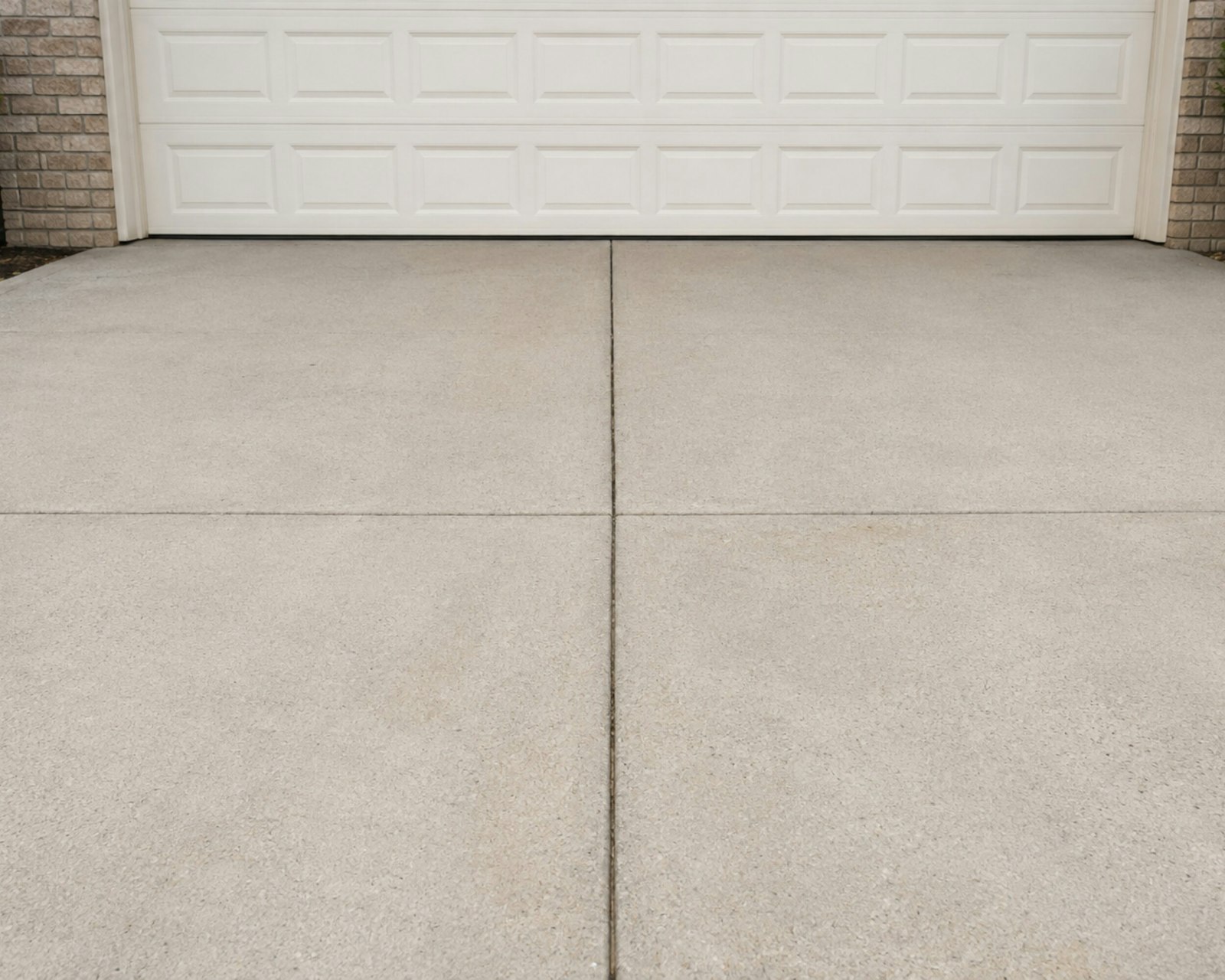
Start with the cars, because they are the one item you cannot relocate in thirty seconds once the crew has hoses charged and laid out. If we are washing the driveway, park on the street or in the garage. If we are washing the house, remember that overspray drifts, so a car parked tight against the siding should move even on a driveway-only visit.
Then do a quick sweep of the flat surfaces. Furniture and grills can go to the lawn. Planters and pots move to a spot that is not getting washed. Roll up the garden hose so it is not lying across the work area. If you have a professional pressure washing visit booked for both the house and the flatwork, clear a walking path around the full perimeter of the home too.
Do windows and doors need to be closed before pressure washing?
This is the step people skip most often, and it is the one with the most expensive consequences. A window that looks shut can be unlatched and sitting a quarter inch proud of the frame. That gap does not leak in a thunderstorm, but a wash pass moving along the siding can push a surprising amount of water through it.
Walk the house once, inside or out, and press each window closed until it latches. Do not forget the basement. Those low windows sit right at the level where driveway and foundation washing happens, so they see more water than any other opening on the house. If your home has a pet door, lock the flap or slide the interior cover in place.
One more east side specific note: many of the older homes we service around Mt. Washington and Anderson Township still have original wood windows with worn glazing. Tell us where they are. We drop the pressure and adjust the angle around fragile frames, but only if we know about them.
What about pets, plants, and landscaping?
Dogs are the big one. Crews open gates, run hoses through them, and prop them while moving equipment, which is exactly how a backyard escape artist gets a free afternoon in the neighborhood. Keep dogs and outdoor cats inside from arrival to departure and let us know if a gate needs to stay latched.
Plants take care of themselves more than people expect. The detergents used in professional house washing are applied at low concentrations, and the standard practice is to wet plantings before washing and rinse them after so nothing sits on the leaves. If you have a prized rose bed or a vegetable garden tight against the house, mention it when you book and we will cover or shield it.
Sprinklers matter for timing. A zone that kicks on mid visit re wets surfaces the crew just finished, so pause the schedule for the day. The same goes for smart timers on drip lines near the foundation.
Should you do anything with water spigots and outlets?
Professional rigs bring the pressure, but the water almost always comes from your outdoor spigot. Turn yours on for a few seconds sometime before wash day. If it is seized, drips at the handle, or was left connected to a cracked splitter all winter, we want to know before the visit, not during it. A quote visit is a good moment to point these things out, and you can request a free pressure washing quote that covers exactly this kind of walkthrough.
Exterior electrical needs less worry than people assume. Modern outlets are GFCI protected and sit behind weather covers. Flip the covers closed, and if a fixture or outlet is cracked or hanging loose, point it out so the crew can mask it and keep spray off it entirely.
The 10-minute prep checklist
The night before, or the morning of:
- Move vehicles to the street or into the garage.
- Clear furniture, grills, planters, doormats, hoses, and toys off the wash surfaces.
- Close and latch every window, including basement windows. Cover the pet door.
- Lock exterior doors shut, then unlock any gate the crew needs to pass through.
- Bring pets indoors and plan to keep them in for the visit.
- Turn off sprinkler and irrigation schedules for the day.
- Test the outdoor spigot and clear a path to it.
- Close exterior outlet covers and flag anything fragile: loose fixtures, old wood windows, hairline cracks in glass.
- Tell us about problem spots you want extra attention on, like the oil patch or the mildew stripe on the north wall.
That is the whole list. Nothing on it needs tools, a ladder, or more than ten minutes. Around here the payoff is real: east side lots carry heavy tree cover, and the mix of pollen film, clay dust, and shade mildew that builds up on our driveways and siding takes full, uninterrupted passes to rinse evenly.
What happens when the crew arrives?
You do not need to hover, and you do not even need to be home if we have access and a reachable phone number. Most visits follow the same arc: a quick walkthrough to confirm scope, setup, the wash itself, then a rinse of plants, walkways, and anything that caught overspray. If something on the checklist got missed, say a window we find unlatched, we close it and mention it rather than working past it.
Our reviews say more about how these visits actually go than we can. The crews behind our 5.0 star Google profile, built on more than a hundred reviews from east side homeowners, treat prep as a shared job: you spend ten minutes, we handle everything else.
Frequently asked questions
Do I need to be home during the pressure washing visit?
No. As long as gates are unlocked, pets are indoors, windows are latched, and the spigot works, the crew can complete the visit while you are out. We confirm scope by phone or text and send photos of the finished work if you want them.
Does the crew use my water and electricity?
The crew connects to your outdoor spigot for water, which is standard across the industry. The washing equipment runs off the rig, not your outlets, so your electric bill is not part of the job. Water usage for a typical residential visit is modest, comparable to normal outdoor watering.
What if it rains on the day of my appointment?
Light rain rarely affects a wash, since the surfaces are getting wet anyway, and detergents keep working. Heavy storms or lightning will get the visit rescheduled for safety. We watch the forecast and reach out ahead of time rather than leaving you guessing on the morning of.
How long does a pressure washing visit take?
It depends on scope. A driveway and sidewalk visit often wraps in an hour or two, while a full house wash with flatwork can run several hours. Larger east side properties with long drives and mature tree cover sit at the longer end. Your quote will include a time estimate.
Ready to put the checklist to work? Get a free quote for pressure washing in Cincinnati from a local east side crew, or call us at (513) 943-0719. While we are there, ask about bundling gutter cleaning into the same visit.
